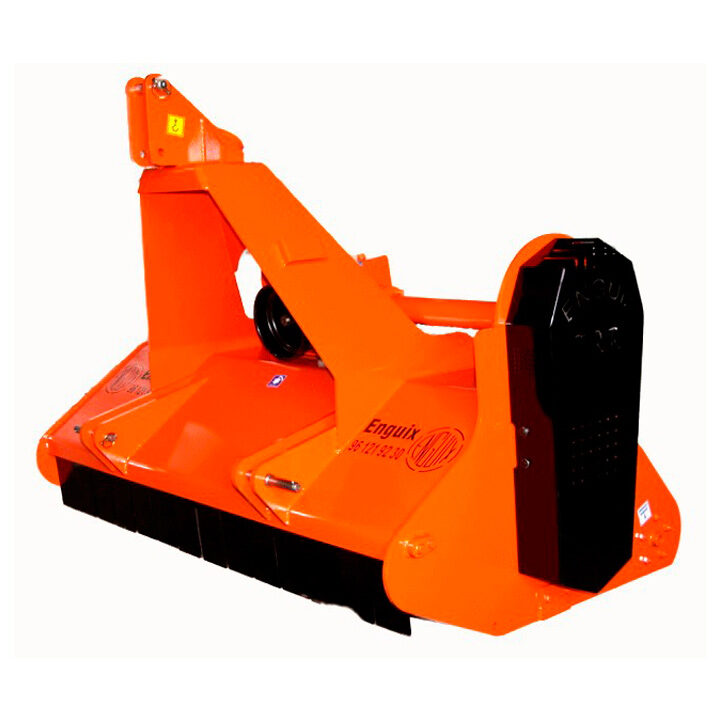
Description
| MODEL | NO. OF BLADES | WORKING WIDTH | OVERALL WIDTH | MAXIMUM POWER (HP) | BASE WEIGHT (KG) |
|---|---|---|---|---|---|
| TRS-150 | 32/16 | 1,500 | 1,660 | 70 to 160 | 720 |
| TRS-175 | 40/20 | 1,750 | 1,910 | 80 to 160 | 800 |
| TRS-200 | 48/24 | 2,000 | 2,160 | 90 to 160 | 890 |
| CODE | DESCRIPTION |
|---|---|
| 01108 | Reinforced hydraulic cylinder with hoses and safety valve |
| 01120 | Long reinforced hydraulic cylinder with hoses and safety valve |
| Z1238 | Top link chain |
When to Choose an Agricultural Shredder
What Is an Agricultural Shredder?
An agricultural shredder is an essential piece of equipment for managing plant waste in the agricultural sector. These machines are designed to shred pruning residues, branches, weeds and other organic waste, reducing their size to facilitate disposal or reuse as organic fertiliser.
How Do Agricultural Shredders Work?
Agricultural shredders operate using a system of blades or hammers mounted on a rotor that spins at high speed, powered by the tractor’s power take-off (PTO). As plant residues enter the machine, they are cut and shredded into small particles, leaving the land clean and ready for further agricultural operations.
Types of Agricultural Shredders
Hammer Shredders
Used for tougher materials such as thick branches and pruning residues from woody crops.
Blade Shredders
Ideal for cutting grass and handling softer plant residues in pastures and gardens.
Combination Shredders
Combine blades and hammers to meet different requirements and process various types of plant waste.
Benefits of Using an Agricultural Shredder
- Efficiency: Reduces the volume of plant waste, making it easier to handle.
- Reuse: Converts plant residues into material suitable for composting or soil mulching.
- Improved maintenance: Keeps agricultural land clean, helping to prevent pests and diseases.
- Versatility: Suitable for different types of crops and terrain conditions.
Main Applications
Agricultural shredders have multiple applications, including:
- Clearing agricultural land after harvesting.
- Removing branches and plant residues from orchards and vineyards.
- Preparing land for new planting.
- Producing organic matter to improve soil quality.